

Blessing of the Grapes 2026: An Armenian Harvest Tradition and a Community Market in Scarborough

On Sunday, August 16, 2026, the Armenian community of Toronto gathered at Holy Trinity Armenian Church on 920 Progress Avenue for one of the oldest days in the Armenian church calendar: the Blessing of the Grapes.
Between 300 and 500 people came through the church that day. After the Divine Liturgy and the blessing itself, the grounds turned into an Armenian market, with vendors, food, and tables set up for the community to browse. Tomsak was one of them.
What the Blessing of the Grapes is
The Blessing of the Grapes, known in Armenian as Khaghogh Orhnek (Խաղողօրհնէք), takes place on the Feast of the Assumption of the Holy Mother of God, the day the Armenian Church honours St. Mary. It is the oldest of all the feasts dedicated to her.
The date moves. Rather than fixing the feast to August 15, the Armenian Church observes it on the Sunday nearest to August 15, a custom that goes back to the time of St. Nersess the Graceful. In 2026 that Sunday was August 16.
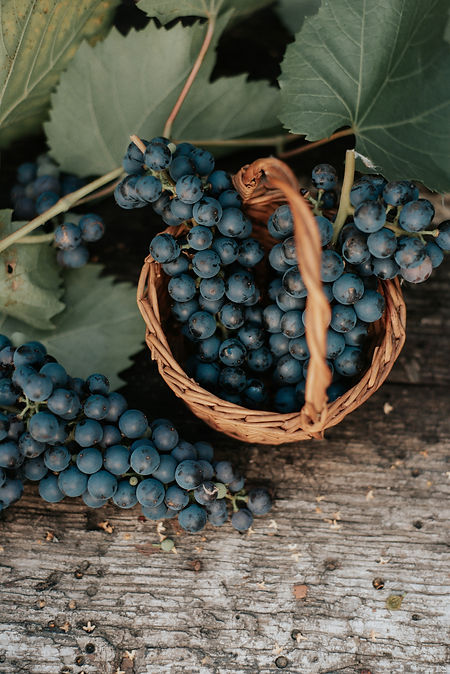
Following the Divine Liturgy, baskets and trays of fresh grapes are brought forward and blessed. The blessed grapes are then handed out to everyone present, and people share them with family and friends. In Armenia and across the diaspora, it is the day the harvest is formally received with thanks.
Why grapes, and why seedless
Grapes hold a particular place in this tradition. They were treated as the first fruits of the harvest, the first produce of the season, and offering the first fruits back to God is a practice that reaches into the Old Testament long before the Armenian Church took it up.
The Christian meaning layered on top of it is direct. Christ was the first born, the first fruit, of Mary. The grapes stand for that.
There is one more detail worth knowing. Traditionally, seedless grapes are used, to emphasise that the fruit came into being without seed, just as Christ became man without human agency. It is a small choice that carries the whole theology of the day.
One of the Armenian Church's five great feasts
The Feast of the Assumption is not a minor date. It is one of the five great tabernacle feasts of the Armenian Apostolic Church, alongside the Nativity and Theophany, Easter, the Transfiguration, and the Exaltation of the Holy Cross.
If the Transfiguration sounds familiar, it should. That is the feast Armenians know as Vardavar, the water festival whose roots run back into pre-Christian Armenia and which now takes place in Canada too. We wrote about Vardavar 2026 and its journey to Canada earlier this year.
Vardavar and the Grape Blessing sit within the same cycle of five. One is water in July, the other is the harvest in August. Both reach back through the church to something older still: the seasons, and the habit of marking them together.
The Armenian market at Holy Trinity
What made August 16 different from an ordinary feast Sunday was what happened after the service.
The church hosted an Armenian market, with vendors set up across the grounds and hundreds of people moving between the tables. Holy Trinity has been a gathering point for Armenians in Toronto since 1928, and it supports far more than services. The parish is home to a choir, Bible study, the Barev Centre, family and social services, and a full calendar of community events through the year.
A feast day market is what that infrastructure looks like in practice: a congregation, a hall, a set of grounds, and a few hundred people with a reason to be in the same place at the same time.

Tomsak at the table
Tomsak had a table at the market, represented by Arrata Gragossian and Artaz Gragossian.
The purpose was straightforward. Tomsak is a newly launched platform, and a lot of the community still does not know it exists. A market with several hundred Armenians walking past is the most efficient way to change that, and considerably more effective than any amount of posting online.
The conversations at the table covered what Tomsak does: it pulls Armenian events from across Canada into one place, so that finding a concert in Montreal, a festival in Toronto, or a community gathering in Vancouver does not depend on already knowing which organization to follow. Alongside the event listings, the site carries announcements, an organization directory, articles, and a newsletter.
A number of people signed up for the Tomsak newsletter on the spot, which was the point of being there. Every subscriber is one more person who hears about the next event without having to go looking for it.

Discover. Connect. Belong.
That is the line Tomsak was built around, and days like August 16 are the clearest example of what it means. A tradition older than most of the countries Armenians now live in, held in a church in Scarborough, drawing several hundred people, most of whom found out through word of mouth.
Word of mouth works. It just does not reach everyone. That gap is the reason Tomsak exists.
If you are organizing something for your community, you can submit your event free in a couple of minutes and we will help get the word out. If you would rather just be told what is coming up, subscribe to the newsletter.
And to see what is happening near you right now, browse our events page, our Armenian Events in Ontario 2026 guide, or the complete national guide.
One community. Many stories. Endless connections.
Frequently asked questions about the Blessing of the Grapes
What is the Armenian Blessing of the Grapes?
It is a ceremony held after the Divine Liturgy on the Feast of the Assumption of the Holy Mother of God, in which fresh grapes are blessed and distributed to the congregation. In Armenian it is called Khaghogh Orhnek.
When is the Blessing of the Grapes?
The Armenian Church observes it on the Sunday nearest to August 15. In 2026 that was Sunday, August 16.
Why does the date change every year?
Because the Feast of the Assumption is tied to the nearest Sunday rather than to a fixed calendar date, a custom that dates back to the time of St. Nersess the Graceful.
Why grapes?
Grapes were considered the first fruits of the harvest, and offering the first fruits to God is an ancient practice. In Christian terms, Christ was the first fruit of Mary, which is what the grapes represent.
Why seedless grapes?
Seedless grapes are traditionally used to emphasise that the fruit came into being without seed, just as Christ became man without human agency.
Is the Blessing of the Grapes one of the major Armenian feasts?
Yes. The Feast of the Assumption of the Holy Mother of God is one of the five great tabernacle feasts of the Armenian Apostolic Church, along with the Nativity and Theophany, Easter, the Transfiguration (Vardavar), and the Exaltation of the Holy Cross.
What is Holy Trinity Armenian Church?
It is an Armenian Apostolic parish in Scarborough that has served the Toronto Armenian community since 1928. Beyond services, it is home to a choir, Bible study, the Barev Centre, family and social services, and community events through the year.
What was Tomsak doing at the event?
Tomsak had a vendor table at the Armenian market, introducing the community to tomsak.ca and signing people up for the newsletter.
How do I find other Armenian events in Toronto and across Canada?
Tomsak lists Armenian community events nationally. Start with the events page or our regional guides for Toronto, Montreal, and Vancouver.


Comments