
Learn Western Armenian in Canada: Inside Hamazkayin Canada's Levon Shant Armenological Course

Most people who grow up with an Armenian identity in Canada reach a point where the language starts to shrink. You can still greet a relative, follow a conversation at a family table, or read a menu at a church bazaar; but somewhere between the Saturday school and adult life, Western Armenian vocabulary stops growing, and it turns into something you understand rather than use.
The Levon Shant Armenological Course, offered by Hamazkayin Canada, was founded with that circumstance in mind. It is not a conversational language class for beginners. It is, rather, a program for people who already have some Armenian and want to take it further, into literature, art and into the kind of conversation that requires attendant vocabulary.
Its eleventh trimester runs from September 12 to December 19, 2026, on Saturday mornings in Montreal, and registration is now open.

What is the Levon Shant Armenological Course?
The course is the initiative of the Hamazkayin Canada Regional Executive, under the direction of Dr. Viken Tufenkjian. Hamazkayin's own description of the program sets out three aims: to give students an environment where they can practice the Western Armenian of everyday life, to deepen their understanding of Armenian culture and literature, and to widen their Armenian vocabulary across a range of subjects.
That third aim is the one that gets underestimated. Plenty of people can hold a conversation about food and family in Armenian, but they switch to English the moment the topic turns to politics, architecture, feminism or anything abstract. A course that teaches the vocabulary of those subjects is doing something a conversation class cannot.
The LSA course runs in person, on Saturday mornings, at the École arménienne Sourp Hagop, on rue Nadon in Montreal. The first registered group of students consisting of sixteen adults met there on January 11, 2020, in a session that ran three hours. The opening lecture was given by Sevan Deirmenjian, an Istanbul-based writer, educator, publisher and translator, on Armenian literature in Istanbul after the Genocide. That set the pattern the course has kept since: a subject, a specialist, and enough time to actually get into it.
The course is sponsored by the Calouste Gulbenkian Foundation's Armenian Communities Department. Reports of the weekly lectures are published on armenolog.wordpress.com, and videographed sessions are posted on the YouTube channel of the course, Hamazkayin Armenolog.
Who was Levon Shant, and why is the course named after him?
The name is not ornamental. Levon Shant (1869-1951) is one of the intellectuals who founded the association that offers this course.
Born in Constantinople in April 1869, Shant became the playwright most Armenians would name first if asked for one. Ancient Gods, first staged in Tbilisi in 1913, is still the work he is best known for, followed by Emperor and The Princess of the Fallen Castle. He served in the parliament of the first Republic of Armenia and led the RA delegation sent to Moscow in April 1920.
After the occupation of Armenia by the Soviets, Shant resettled in Cairo, where on May 28, 1928, he became one of the nine founders of Hamazkayin, alongside Nikol Aghbalian, Caspar Ipekian, Hamo Ohanjanian and five others. The association's stated goal was to raise the education of the Armenian people by teaching them the Armenian language and raising the Armenian consciousness, working on three fronts: schooling the next generation, adult education, and Armenian studies as a field.
Shant then moved to Beirut and became the founding principal of the Nishan Palandjian Jemaran, a post he held until his death in Beirut in November 1951. Almost a century later, a course bearing his name in Armenian studies, run by Hamazkayin, actualizes the third of the above-mentioned three aims.
When Hamazkayin Toronto marked Shant's legacy at the Hamazkayin Theatre in March 2020, Dr. Tufenkjian described him using a phrase others had used before: “the consummate Armenian,” someone who pulled Western Armenian heritage, Eastern Armenian experience from the Caucasus and a European education together into one figure.
What a trimester actually looks like
Course descriptions usually tend to be vague. This one does not have to be, because the syllabus is published online.
The Winter 2026 semester comprised the following subjects:
2026 anniversaries of Armenian literary figures, with Dr. Tufenkjian;
Three short stories by Levon Bashalian, by Dr. Tufenkjian;
Louisa Aslanian, the spirit of struggle by Dr. Tufenkjian;
Poghos Senapian, by Haroutioune Berberian;
Epistolary literature, by Vrej-Armen Artinian;
A translation workshop, with Dr. Tufenkjian;
Zapel Yesaian and her contemporaries, by Raffi Ajemian;
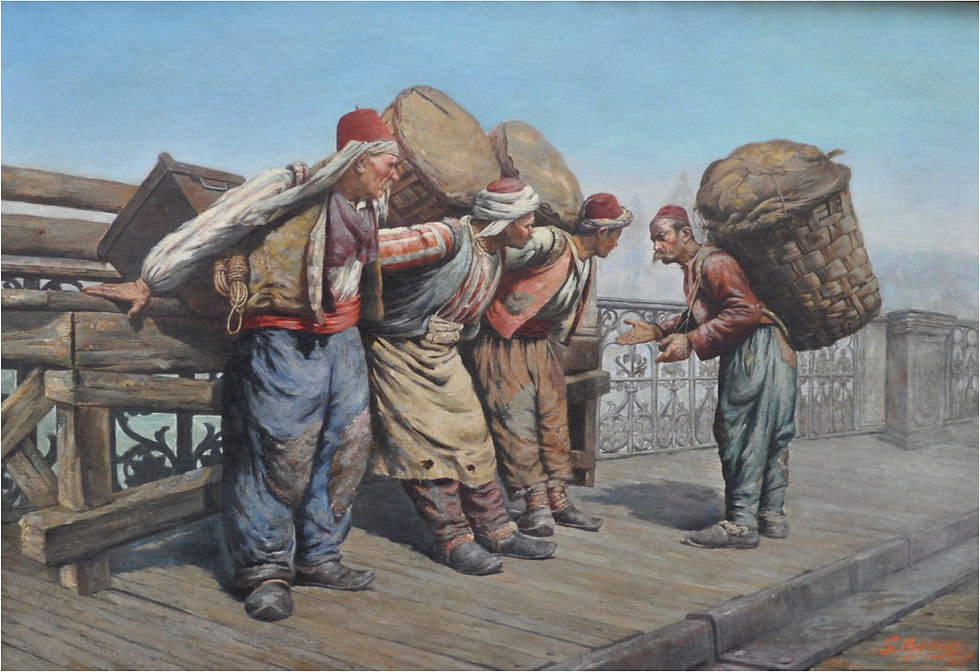
The figure of the Armenian pandukht through the eyes of Armenian realist painters in Constantinople, by Dr. Vazken Khatchig Davitian;
Symbolism and Armenian literature, by Dr. Krikor Beledian;
Presentation of their research work by students.
Look at that list as a whole and the design becomes obvious. It moves between literature, visual art and language mechanics, and it alternates lectures with workshops where students produce something themselves. It also focuses on writers a general education in Armenian would never introduce, e.g. Louisa Aslanian, the only Armenian female author killed by Nazis. In fact, this is the point of a course calling itself armenological rather than simply a language class.
During various semesters, lecturers also cover Armenian orthography, for it is not a small technical matter in Armenian. It is the live question of classical spelling against the reformed system imposed in Soviet Armenia in the 1920s, and it is one of the things distinguishing the Armenian diaspora from the homeland. In an earlier semester, Vrej-Armen Artinian, a Montreal-based author, covered that topic.
Why Western Armenian, specifically
Canadian-Armenians constitute an overwhelmingly Western Armenian community, descended from the survivors of the Genocide, and later, by those who arrived from Greece, Egypt, Syria, Lebanon, and Iran. With the exception of the latter, Western Armenian is the language of that history.
It is also a language under real pressure. UNESCO's 2010 Atlas of the World's Languages in Danger listed Western Armenian in Turkey as definitely endangered, and the language's wider position is not much more comfortable. It is not the official language of any state, so it survives entirely through diaspora schools, churches, media and families. When a generation stops using it in adult contexts, there is no national institution underneath to prop it up.
That is the gap a course like this fills. Armenian day schools and Saturday schools carry children through their teens. After that, for most people, formal Armenian ends. Hamazkayin Canada describes the Levon Shant course as an initiative for graduates of Armenian secondary schools.
Eleven trimesters in, the course is one of the few places in Canada where that work continues past the age of eighteen.
Who it is for
The honest answer is: for people who are past the beginner stage and are willing to give a single subject a long, undistracted sitting.
That includes recent graduates of Armenian high schools, university students taking Armenian studies seriously, community members who went through Armenian schools and want to use the language again, teachers who want to expand their subject vocabulary, and anyone who reads Armenian slowly and would like to read it properly. It is not the right starting point for someone learning the alphabet.
How to register
The eleventh trimester is open for registration now.
Dates: September 12 to December 19, 2026
Time: Saturdays, 10:30 to 1:30
Where: École arménienne Sourp Hagop, 3400 rue Nadon, Montreal, QC H4J 1P5, in person
Director: Dr. Viken Tufenkjian
To register: email armenolog@gmail.com to reserve your place
More information: armenolog.wordpress.com
Answers to general questions about other Hamazkayin Canada programs can be found on the organisation's contact page.

Discover. Connect. Belong.
A course like this is easy to miss. It does not advertise heavily; it runs on a semester calendar most people are not watching, and it reaches you mainly if you already know someone in Hamazkayin. That is true of a lot of the best things happening in the Armenian community in Canada, and it is the specific problem Tomsak was built to solve.
We list Armenian events, programs and organisations from across the country in one place, so that finding a lecture series in Montreal, a festival in Toronto or a community gathering in Vancouver does not depend on already being in the right group chat.
Browse what is coming up on our events page, or start with our regional guides: Armenian events in Ontario, Montreal, Vancouver, and the complete national guide.
If your organisation runs something the community should know about, submit your event free in a couple of minutes. If you would rather just be told what is coming, subscribe to our newsletter.
You might also want to read about Armat and its work bringing Armenian culture to audiences across Canada, or the Zoryan Institute's scholarship in Armenian studies.
One community. Many stories. Endless connections.
Frequently asked questions
What is the Levon Shant Armenological Course? It is an Armenian studies program offered by Hamazkayin Canada. It covers Western Armenian language, Armenian literature, and the arts through a series of lectures and workshops, and it is aimed at graduates of Armenian high schools and adults rather than beginners.
Who runs the course? Hamazkayin Canada, the Canadian region of the Hamazkayin Armenian Educational and Cultural Society. Dr. Viken Tufenkjian organises and heads the program.
When did the course start? The first documented session was held on January 11, 2020, at École arménienne Sourp Hagop in Montreal. The course is now in its eleventh trimester.
Where and when does the course meet? In person at École arménienne Sourp Hagop, 3400 rue Nadon, Montreal, on Saturday mornings from 10:30 to 1:30. The eleventh trimester runs from September 12 to December 19, 2026.
Who was Levon Shant? Levon Shant (1869-1951) was an Armenian playwright, educator and political figure, widely regarded as the most important 20 C Armenian playwright. He was one of the nine founders of Hamazkayin in Cairo in 1928 and the founding principal of the Nishan Palandjian Djemaran in Beirut.
Is the course taught in Armenian or English? The program is built around Western Armenian, and the point is to give students a setting where they use it. Course materials and the semester listings are published in Armenian.
Do I need to be fluent to join? No, but you should be past the beginner stage. If you are starting from the alphabet, there are many conversational Armenian courses online.
How do I register? Email armenolog@gmail.com to reserve a place. Registration for the eleventh trimester is open.
How long is each session? Saturday sessions run from 10:30 to 1:30, built around a single subject and a specialist lecturer.
Who supports the course? The Calouste Gulbenkian Foundation's Armenian Communities Department.
What subjects does the course cover? Recent trimesters have included Armenian literature, classical and contemporary Armenian writers such as Gregory of Narek, Misak Medzarents, Nigoghos Sarafian, Vazgen Shushanian, Daniel Varuzhan, Shahan Shahnur, Krikor Beledian, the woman question in Armenian literature, Armenian pedagogy, restoration architecture, poetry and image affinities, and workshops on syntax, orthography and punctuation.
Is Western Armenian endangered? UNESCO's 2010 Atlas of the World's Languages in Danger listed Western Armenian in Turkey as definitely endangered. The language is not the official language of any state, so it depends on diaspora schools, media, churches and families to survive.
Where can I find the trimester schedule? At armenolog.wordpress.com, where semesters are listed, as well as lecturers and topics. The website also has archival materials.
What else does Hamazkayin Canada run? Student writing contests, a literary competition challenging adults to write youth literature in Western Armenian, the Oshakan publishing series, and participation in ArtLinks, plus chapter-level programs including the Pomegranate Film Festival in Toronto and the POM film festival in Montreal.
Where are Hamazkayin's Canadian chapters? Sanahin Quebec is in Montreal and Laval, founded 1963; Glatsor is in Toronto, founded 1969; Tatev is in Cambridge, founded 1976; and Varak is in Vancouver, founded 1981.
How do I find other Armenian events and programs in Canada? Tomsak lists Armenian events, organisations and announcements from across Canada in one place. Start with the events page or the regional guides for Ontario, Montreal and Vancouver.


Comments